
Persistent mechanical symptoms
Symptoms that change with position, loading or activity may warrant a closer evaluation.
Individual Candidacy
Possibly—but the answer should come from your full clinical picture, not from pain alone or a single phrase on an imaging report.
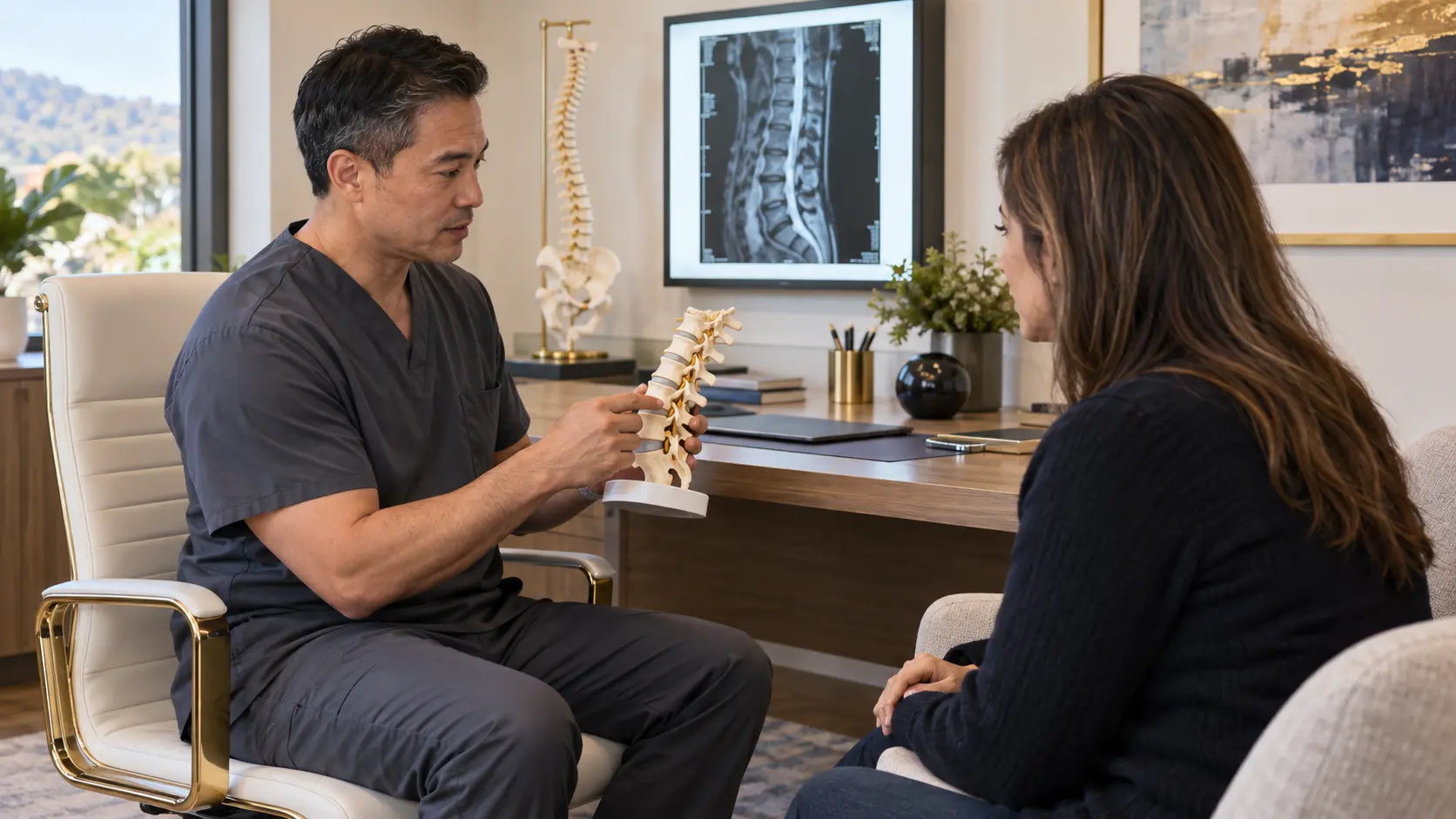
Symptoms that change with position, loading or activity may warrant a closer evaluation.
Bulges and degeneration can appear without symptoms. Imaging must match the clinical picture.
History, examination, safety considerations and goals determine whether traction belongs in the plan.
Patterns Worth Evaluating
These patterns do not confirm candidacy, but they can support a more focused consultation.
Pain, tingling or numbness may suggest nerve-root irritation, although other conditions can create similar symptoms.
A consistent mechanical pattern can help identify which spinal structures may be involved and how they respond to position.
A bulging or herniated disc becomes more meaningful when its location fits the symptoms and neurological findings.
Stable symptoms without urgent warning signs may allow time to consider an individualized non-surgical approach.
Prior care, medication, rest or exercise response can offer useful context—but does not automatically make decompression the next answer.
Walking, sleeping, sitting, driving, lifting or returning to activity provide more useful progress markers than pain scores alone.
Conditions Commonly Evaluated
People with the same diagnosis can have very different symptoms, risks and treatment needs.
What Determines Candidacy
Responsible treatment selection means understanding not only where it hurts, but why the symptoms behave as they do and whether traction can be applied safely.
See what to expect at your first visit →Location, radiation, aggravating positions, relieving positions, duration and changes over time help narrow the likely source.
Strength, sensation, reflexes, balance and nerve-tension findings can affect urgency and treatment selection.
Existing studies are interpreted alongside the examination. New imaging is considered only when clinically appropriate.
Bone health, surgical history, trauma, systemic illness, pregnancy status and other factors may change or rule out the approach.
The plan should connect to functional goals and include reassessment rather than continuing indefinitely without change.
Safety Before Treatment
Examples can include:
Only an individual evaluation can determine how these factors affect care.
These can include:
Call 911 or seek emergency care when symptoms may represent a medical emergency.
Your Possible Next Step
The clinical picture supports a cautious, individualized trial with defined goals and progress checks.
Exercise, manual care, rehabilitation, activity modification or another approach may be more appropriate.
Imaging, medical consultation or referral may be recommended before deciding on treatment.
Questions Patients Ask
Candidacy is determined through your symptom pattern, health history, examination findings, functional goals and imaging when clinically appropriate. Pain or an imaging finding alone is not enough.
No. Disc findings vary and may or may not explain symptoms. The location, neurological status, overall health and safety of traction all matter.
Not everyone automatically needs new imaging. Existing imaging is reviewed in context, and additional imaging is considered when it is clinically appropriate and likely to affect the plan.
Not automatically. The first priority is determining whether decompression is an appropriate and safe option before a plan is recommended.
You should receive a clear explanation and a responsible next step, which may include another conservative option, additional testing or referral.
This page is educational and cannot diagnose a condition or determine treatment candidacy. Last reviewed September 21, 2026.
Begin With an Evaluation
Your consultation begins with your history, examination and goals—not a preset recommendation.