
Disc-sensitive pattern
Symptoms may worsen with sitting, bending, lifting, or coughing when a disc is contributing.
Nerve Pain · Chino Hills, CA
Sciatica describes a pattern of symptoms, not one single diagnosis. A careful examination helps determine whether a lumbar nerve root is involved and whether conservative decompression may be an appropriate part of care.
Understanding the Condition
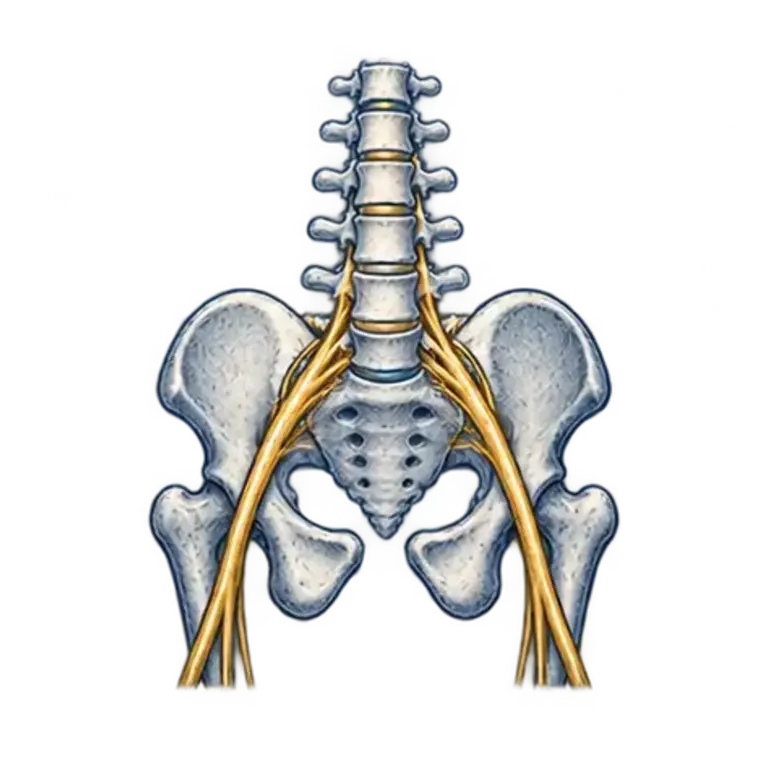
The sciatic nerves are formed by nerve roots from the lower spine. When a lumbar nerve root is irritated, symptoms may travel through the buttock and into the thigh, calf, or foot. A herniated disc and age-related narrowing are common spinal contributors, but they are not the only possibilities.
“Sciatica” is commonly used for radiating leg pain. “Lumbar radiculopathy” is more specific and may include measurable changes in strength, reflexes, or sensation associated with a particular nerve root. Accurate classification matters because different causes can require different care.
Signs & Patterns
Symptoms differ by spinal level, severity, activity, and the structures involved. This list is educational and is not a diagnosis.
Symptoms may worsen with sitting, bending, lifting, or coughing when a disc is contributing.
Standing or walking may aggravate symptoms that ease with sitting or bending forward.
Hip, sacroiliac, muscular, vascular, and other conditions can mimic sciatica and need to be considered.
Seek prompt medical evaluation for new bowel or bladder difficulty, numbness around the saddle region, rapidly increasing weakness, major trauma, fever with severe spinal pain, unexplained systemic symptoms, or sudden loss of balance or coordination.
Individual Evaluation
The purpose of the first visit is to determine the most likely pain generator, identify safety considerations, and establish whether conservative care is reasonable.
Map the exact symptom path and identify positions or activities that reproduce or ease it.
Test strength, reflexes, sensation, neural tension, spinal movement, gait, and relevant hip function.
Review imaging when findings, duration, trauma, progression, or treatment decisions make it clinically useful.
Identify progressive neurological loss or other signs that call for urgent medical referral.
Where Decompression May Fit
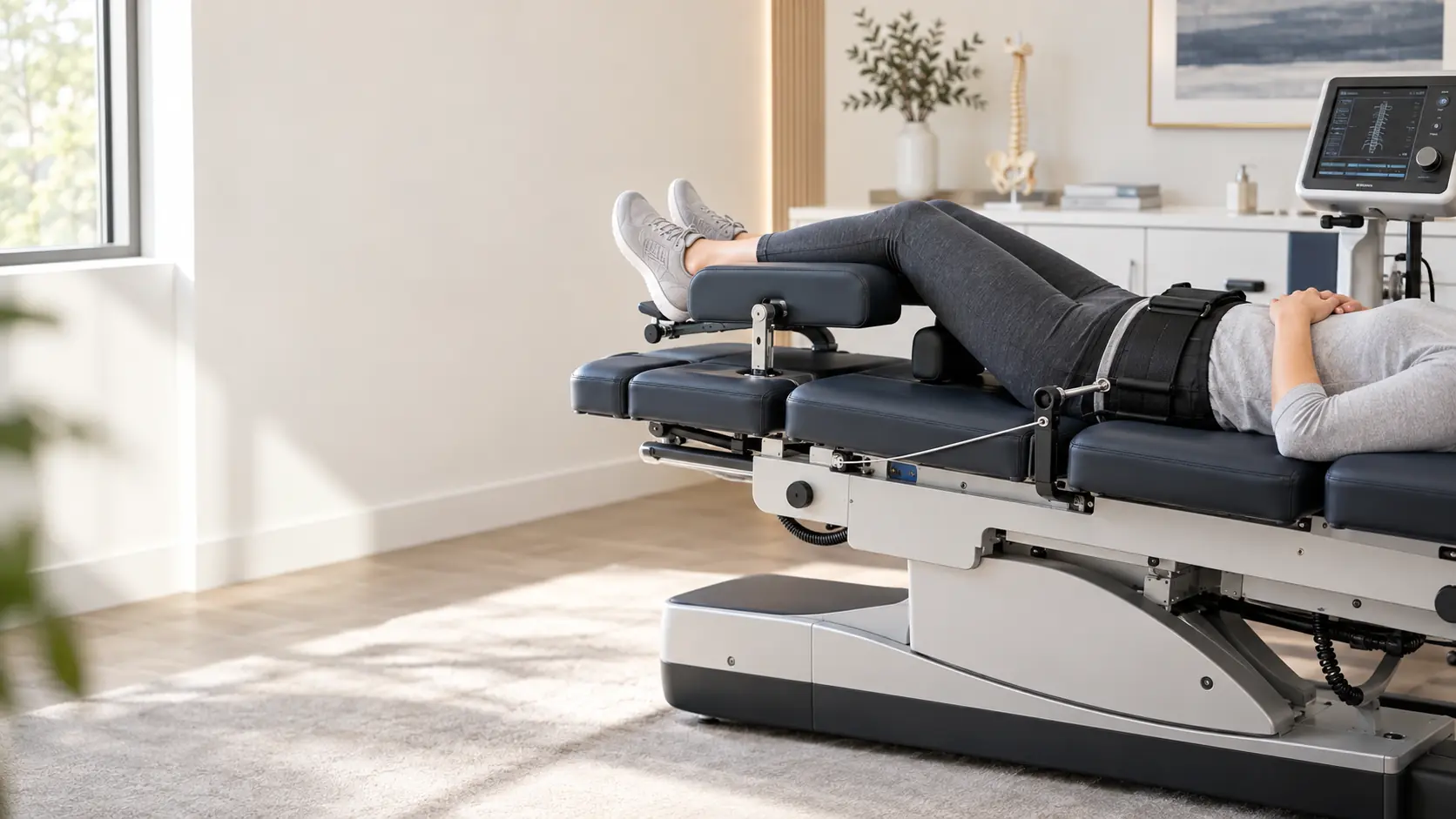
For selected lumbar radiculopathy presentations, controlled supine traction used alongside other conservative care has shown short-term improvement in pain and disability in some studies. Results are not uniform, so an early response must be measured rather than assumed.
Research on traction shows possible short-term benefit in selected lumbar presentations, while study quality, patient selection, and long-term evidence remain limited. Individual results vary.
A Deliberate Process
Review your history, symptoms, neurological status, prior care, imaging, and goals.
If appropriate, begin with tolerable settings and clear measures of function and symptom response.
Continue, modify, combine, or refer based on meaningful progress—not a preset package.
Questions Patients Ask
No. Hip conditions, muscular referral, sacroiliac pain, vascular problems, and other conditions can resemble sciatica. Examination helps narrow the source.
Sciatica describes a radiating symptom pattern. Radiculopathy more specifically refers to impaired nerve-root function and may include weakness, reflex changes, or altered sensation.
It may be considered when those symptoms appear related to a mechanically irritated lumbar nerve root and screening supports traction. Response varies, and worsening neurological symptoms require reassessment.
There is no universal timetable. Early care should include defined functional goals and regular reassessment so an ineffective approach is not continued indefinitely.
Seek urgent medical evaluation for new bowel or bladder difficulty, numbness around the groin or saddle region, rapidly increasing weakness, major trauma, fever with severe back pain, or other concerning systemic symptoms.
Continue Learning
Content is educational, not a diagnosis or guarantee of outcome. Last reviewed 2026-09-14.
A personalized evaluation is the first step toward determining whether decompression—or another path—fits your case.