
About the Treatment
The mechanics of taking pressure off a disc.
Here's a closer look at how decompression works, what it's used for in the neck versus the low back, what a session actually feels like, and the research behind it.
The Mechanism
Negative pressure, created gently
Spinal discs act as cushions between vertebrae. Injury, degeneration, and repetitive loading can contribute to disc changes or irritation around nearby nerves. Decompression uses controlled traction with the goal of reducing mechanical pressure in a targeted area.
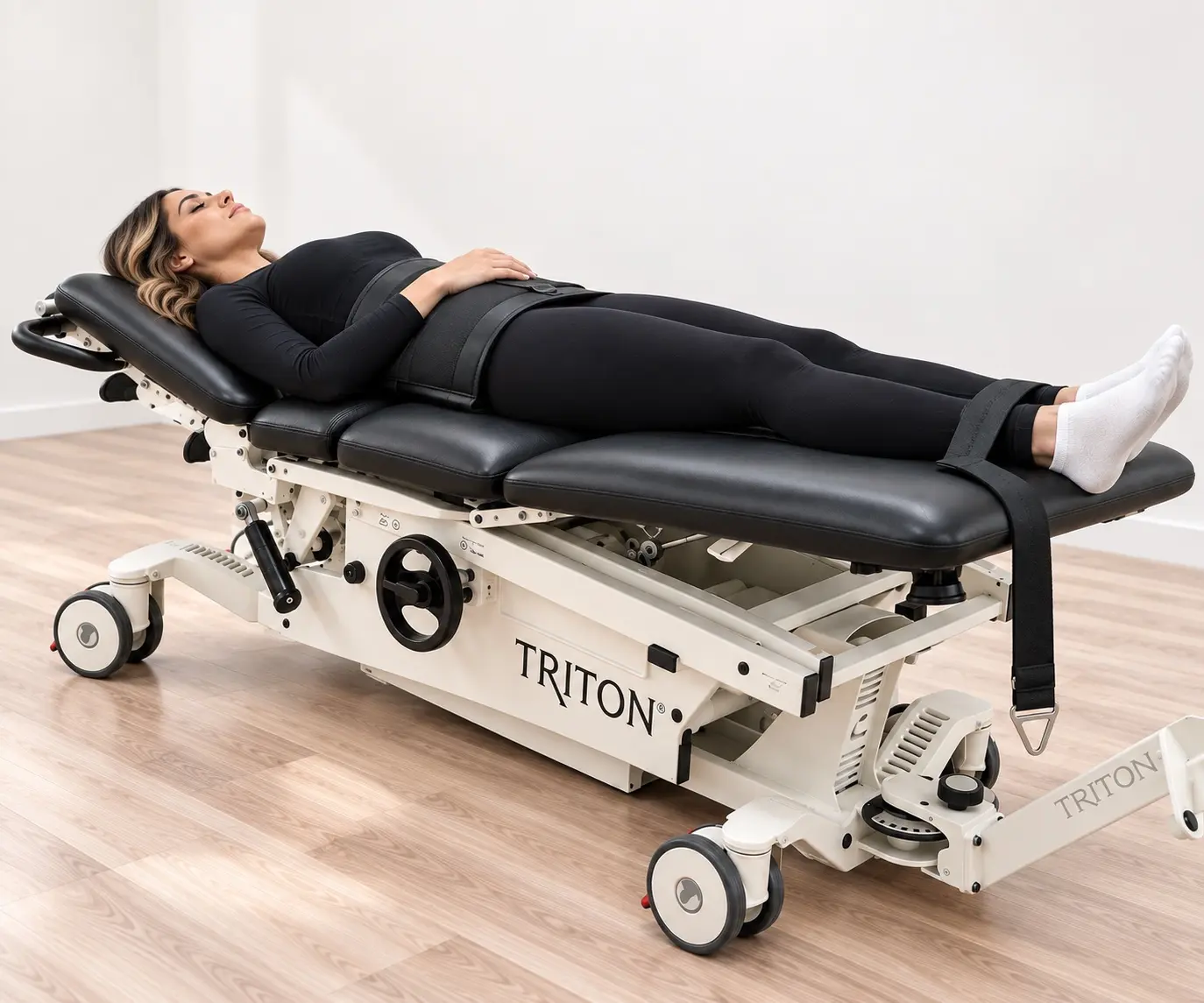
On the table, a supportive harness helps position your body while the equipment delivers a measured traction-and-release cycle. The force, angle, and duration are adjusted for the area being addressed and for your comfort.
The proposed mechanism involves changes in mechanical loading and pressure within and around spinal structures. Individual results vary, and decompression should be recommended only after screening for suitability and contraindications.
Where Disc Pain Comes From
It's rarely one single event
The discs between your vertebrae act as cushions and shock absorbers. Over time, or after an injury, they can lose hydration or begin to bulge outward. When that happens, nearby nerves can become irritated — leading to pain, numbness, tingling, or weakness that may travel down an arm or leg.
Disc problems don't always start with one major accident. Just as often, they build gradually through repetitive stress, prolonged sitting, poor posture, physically demanding work, sports injuries, or the natural aging process. Understanding which of these is driving your symptoms is what shapes the right treatment plan — decompression alone, or combined with adjustments, rehab exercises, and posture correction.
Where It's Applied
Cervical vs. lumbar decompression
Cervical (neck)
Targets compression in the neck, often behind conditions like cervical radiculopathy — when a nerve root in the neck is pinched and sends pain, numbness, or weakness down into the shoulder, arm, or hand.
- Gentler traction angle suited to the neck's smaller vertebrae
- Aims to reduce inflammation around the nerve root
- Often paired with posture and ergonomics guidance
Lumbar (low back)
Targets the lower back, where sciatica, herniated discs, and degenerative disc disease are most common. Reducing pressure here also tends to improve overall spinal alignment.
- Addresses radiating pain and numbness down the leg
- Supports patients looking to avoid or delay surgery
- Frequently combined with core-supportive rehab exercises
Your Visit
What to expect, start to finish
Consultation & examination
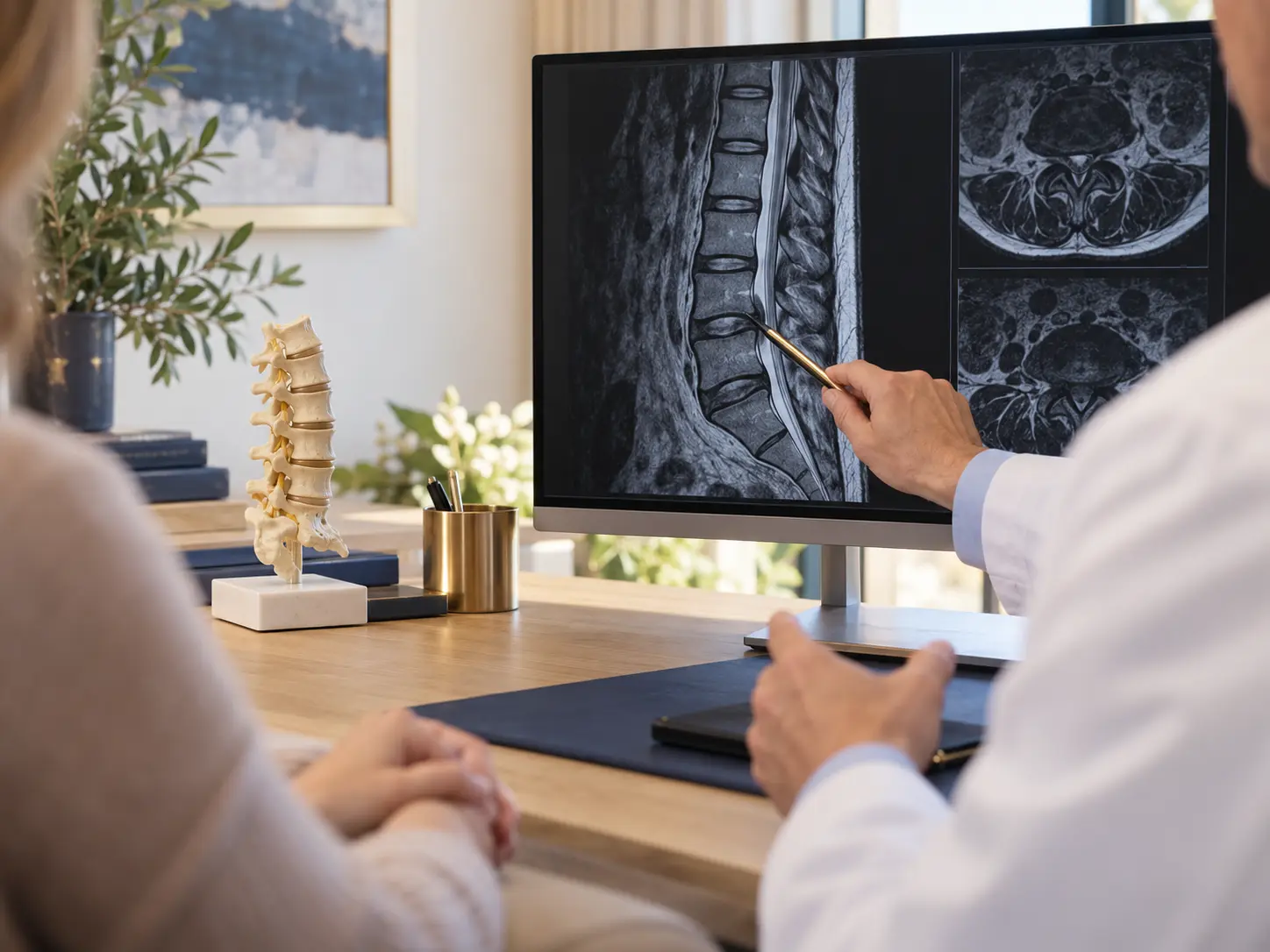
Your first visit includes a consultation and examination. When imaging is clinically appropriate, it may also be considered as part of the evaluation before a plan is recommended.
The session
You're positioned comfortably on the decompression table. Over roughly 20–30 minutes, gentle, computer-controlled cycles of stretch and release do the work.
Track & adjust
Progress is checked against your starting findings, goals, and response, so the plan can be adjusted rather than run on autopilot.
The Evidence
What current research can tell us
Mechanical traction and non-surgical decompression have been studied, but findings vary by diagnosis, technique, and treatment program. The evidence does not support promising the same outcome to every patient.
Find out whether decompression fits your needs
Bring your history and any prior imaging — the first visit is where your plan gets built. See the complete Chino Hills decompression experience →